
What is Nordic Walking & How Does it Differ From Regular Walking & Hiking?
This is the Internet’s #1 most-asked question about Nordic walking!
Here is a quick comparison of Nordic walking, regular walking and hiking:
REGULAR WALKING
• Primary purpose: to improve or maintain overall physical and mental health
• Requires no special equipment
• Engages primarily the legs and glute muscles while the upper body is relatively relaxed
• Provides low to moderate cardiovascular benefits compared to Nordic walking
• Burns fewer calories compared to Nordic walking
NORDIC WALKING (also called urban poling or pole walking):
• Primary purpose: to enjoy a fitness activity that provides cardiovascular fitness ana a full-body workout
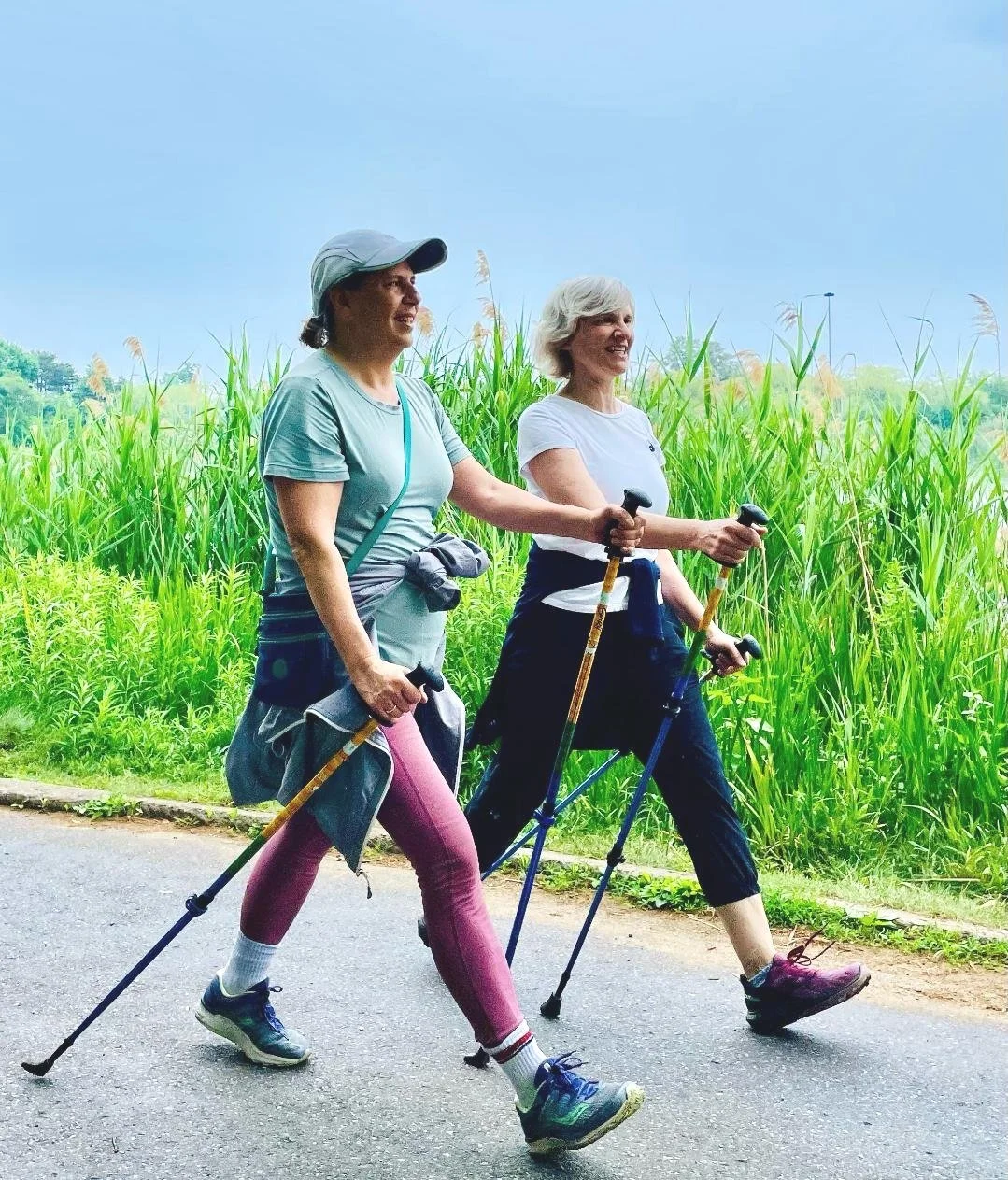
Nordic walking (with Nordic walking poles)
• Requires specially-designed Nordic walking poles
• Incorporates a slightly longer stride than regular walking, a rhythmic long-arm swing motion, and a “plant, push, propel” poling technique; tips of the poles are planted just behind the feet
• Engages engages the entire body, including legs, arms, shoulders, and core muscles
• Nordic walkers typically walk on relatively smooth terrain, such as sidewalks and trails.

Hiking (with hiking poles)
HIKING WITH HIKING POLES (also called trekking or tramping):
• Primary purpose: increased stability and support while walking, particularly on uneven terrain, and with less impact on the hips, back and knees
• Requires specially-designed hiking poles
• Incorporates a similar or shorter stride than regular walking, a rhythmic bent-elbow arm swing motion; tips of the poles are generally planted in front of or beside the body
• Engages primarily the lower body muscles, such as legs and glutes; engages the upper body when ascending and descending hills and on demanding terrain
• Hikers typically walk on surfaces that are relatively rugged, rocky, and uneven
